God of War
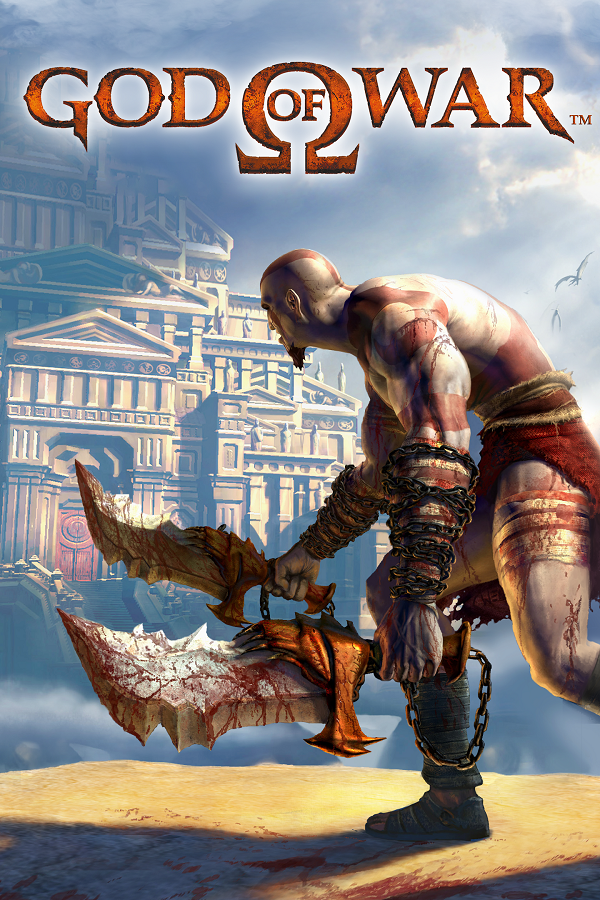
A Game that needs no Introduction#
Released in 2005 by Santa Monica Studios, God of War grew as a very influential franchise in gaming and is also a cornerstone of Playstation.
Over the course of this review I’ll go through my recent play through, the game mechanics, the lore and other relevant bits of information.
Disclaimer: I’ve played this game around July 2025, but this review has been in my backlog ever since. The introduction has been written around that time, while the remaining has been written in June 2026
20 Years late to the party#
Playing it 20 years after launch feels a bit late, except it wasn’t. You see, I had a Playstation 2 as a kid, but I didn’t have the skill to beat it. I would play the first 20 minutes or so until I got to the Hydra, then I wouldn’t figure out what to do and shutdown the game.
That being said, I always enjoyed my time playing it, even if I didn’t know what I was doing. I remember waiting in anticipation for the PS3 and God of War 3 which I played for the first time this year.
It’s been 15 years since God of War 3 was launched but finally in 2026 I beat it
November last year I bought myself a PS5 and got God of War Ragnarök, this prompted me to go back and finish the classic games for the first time.
Story#
In God of War you take control of Kratos, a spartan warrior in service of the Gods. We learn during the game that Kratos was a fiercesome spartan general, but he met his match fighting against a Barbarian King. In a last effort Kratos begged for Ares, the God of War, to destroy his enemies and gave him control over his life. Later we learn that Ares tricked Kratos into murdering his own family. Kratos then promised to kill Ares and set off to serve the other Gods of Olympus.
Pacing#
This backstory is presented over multiple cutscenes throughout the game, which allow the writers to pace the game much more effectively. This is important because of how combat heavy the game is, they interlace puzzles with combat and storytelling to keep the player engaged.
To quote Josh Strife Hayes, “A rollercoaster cannot be only downhill”.
And there are multiple stories told throughout the game: there’s Kratos dark past, there’s the actual game story and the pandora’s temple architect backstory. Perhaps my biggest compliment to the game’s pacing is playing it through a single session without feeling tired at all. I was constantly progressing and being rewarded for it.
Length#
A big plus for me is the game’s length being around 7 hours. I mentioned it in the Celeste review but I rather have a short and complete game then having an enormous game bloated by hundreds of collect-a-thons. The 7 hour mark meant I could play the game on a single day, even hunting for the hidden items and exploring the entire scenery. Not to say that longer games are a bad thing, but it meant I could finish the game within a single weekend (in my case a single day) and move on. With this length the game has no space for artificial padding and filler sections (looking at you Ragnarök).
The short length also helps with the pacing, you’re always moving forward to something new and exciting and there’s no time to get bored.
Storytelling#
In contrast to games like Elden Ring or Hollow Knight, (which are also mechanic intensive games) God of War makes sure to tell you the full picture. Past events are told through cutscenes and narration from Gaia while current events are sometime told with in game animations and other times with cutscenes aswell.
Despite having a lot of cutscenes, they tend to be more on the backstory side. There are many times where the game will present what I’d call a “playable cutscene” where the camera will zoom out to show a set piece and you’ll still be controlling Kratos.
Something else God of War 1 also features a lot are cinematic quick time events which always have the player on the pilot seat performing the important actions. It’s one of the things I think PlayStation has devolved over time, but they nailed it on this one.
Gameplay#
The core gameplay loop in God of War is combat. It works with combo style controls, that is, you have a light and a heavy attack and pressing them in specific sequences create combos. You can also use some modifiers (like L1 and R1) to make different combos. Some combos can be interrupted to dodge or block enemy attacks, and some enemies require dodging while others require blocking.
Combat Styles#
Each enemy requiring a different approach to combat ends up making fights more dynamic. You can of course use the basic Square + Square + Triangle combo to beat the entire game, but there’s enough freedom for each player to find their favorite play style. To give a more concrete example: 2 of the most common enemies are the minotaurs and the gorgons. The minotaur attack pattern is more predictable and constant, and blocking it’s attacks is a very effective way to avoid being hit, while the gorgon attack pattern is more fast paced and you cannot block the gaze attack. When fighting both at the same time, you need to be quick on the controls to use the appropriate defense strategy and do more damage effectively. These 2 enemies in particular also have an interesting feature, but before talking about that, I need to talk about grabbing enemies.
Cinematic Finishers#
By pressing circle you can grab enemies and rip them apart in very entertaining ways. Not all enemies can be grabbed from the start though. Tougher enemies require you to weaken them beforehand, and when they are weak enough, a big circle popup will appear above their head. There’s no other way to describe it than: I love this circle.
For the most basic enemies, grabbing them by pressing circle won’t require any other action, just sit back and enjoy, but for the tougher ones you’ll start a minigame. These minigames require you to perform some actions like pressing buttons or moving the analog stick around and they are brutal. Killing an enemy with a finisher like this yields more red orbs than a regular kill, but most importantly: minotaurs give health orbs and gorgons give blue orbs.
This mechanic has a very positive effect in combat: instead of playing defensively by saving health and magic, you can recover during a fight if necessary. Instead of having a health item available to use, the health item is an enemy trying to kill you. With the varied combat system in addition to these special finishers, God of War creates a very engaging combat system, and the player has to be constantly adapting how to play through fights.
Puzzles#
God of War has it’s fair share of puzzles. The bulk of the game is set on Pandora’s Temple after all. Puzzles range from simple “place square box in square hole” to more mechanical puzzles like “get this box across the ship while archers shoot at you’’. I think the designers did a great job integrating the puzzles with the combat mechanics.
A few highlight puzzles come to mind:
- The hydra boss fight, having to impale the smaller heads before being able to fight the bigger head
- On Pandora’s Temple, having to fight the centaurs in Hades chamber
- Having to burn the soldier in sacrifice
A fun fact that comes to mind is the heritage: God of War 1 was meant to be a Devil May Cry clone, and DMC originally was supposed to be a Resident Evil clone. When I think about it, I can see how some characteristics of the original RE got passed down to GoW.
Character Progression#
Throughout the game, there are a few different upgrades available for Kratos. As part of the story, you’ll get a few power ups from the gods themselves, such as Posseidon’s Rage and Medusa’s Gaze. Then as you kill enemies, you’ll collect red orbs that can be used to upgrade your weapons and magic. During my normal gameplay I didn’t get enough orbs to upgrade all my weapons, which forces the player to pick the ones they prefer and invest in them early on. Because of this, I ended up not using Artemis blade at all, since when I got it, my blades were way more upgraded.
While the power ups are unmissable, there are missable secret items that increase your max health and mana, and there’s one optional puzzle that boosts both stats to max.
Linear Style#
God of War is a linear game. You move forward through the story and each set piece without being able to go back. While the game doesn’t have the concept of levels or chapters, each area is built with exploration in mind.
The gameplay will generally be:
-
Arrive at the new area
-
Find out which is the main path
-
Explore the other paths
-
Explore the main path
Of course you can explore for the sake of exploring, but the game uses hidden chests to reward you.
Chests#
They come in 4 flavors: Green, Blue, Red and Uncolored.
Each colored chest grants you with their attribute: heath, mana and orbs respectively. The uncolored chests have 3 different items they can yield: Phoenix Feathers, Gorgon Eyes, and more Red Orbs.
Feathers increase you max mana while the eyes increase your health. Even though you can miss these items, the game rellocates them to other hidden chests. You don’t need to explore 100% to improve your character.
And the beauty of the uncolored chests is when you find the failsafe chest (which would have an item you already got) it will just yield red orbs.
Conclusion#
God of War 1 is a perfect hack ’n slash game. From the incredibly satisfying combat to the heavy lore the game brings, it’s guaranteed 7 hours of brain shutdown fun. It’s definitely one my favorite games ever and I’m really happy that I got back to finishing it.
God of War 1 is a 9/10